Insights & Practices
The TED* Blog
Stories, frameworks, and practices for shifting from drama to empowerment.
Get new articles by email
Stories and practices, delivered to your inbox.
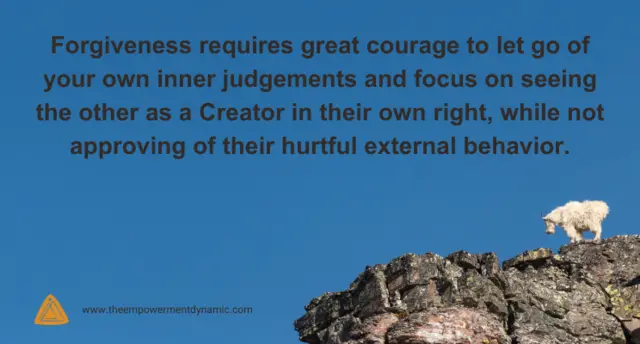
Why Forgiving Is So Hard
Human beings are wired to connect and have a natural desire to be in positive relationships with others. But relationships are not always “goodness and light.” Whether at home or work, even the most trusting…
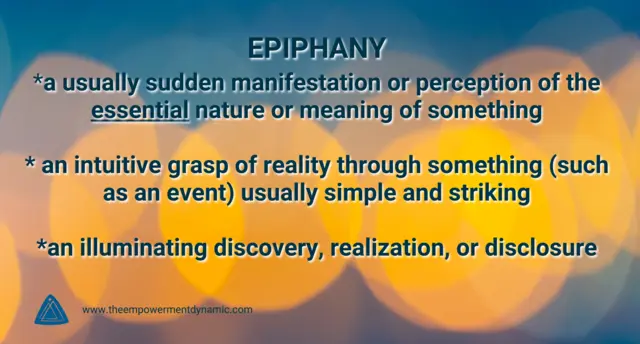
The Origin Epiphany
I (David) am often asked about the genesis of what eventually became the book, The Power of TED* (*The Empowerment Dynamic) . The following is my personal story that led to the story in the book. At a critical time in my…
Empowerment Bypass
If you come upon a traffic jam, you may check your phone and highway app to locate a faster way around the gridlock. You see a new route that looks longer but hopefully, you will make better time. You would rather take…
Transforming Your Negative Inner Dialogue
We all do it. We talk to ourselves. Having an inner dialogue with ourselves is often called “self-talk.” It is one of the unique characteristics that gives human beings the ability to reason and think about situations.…
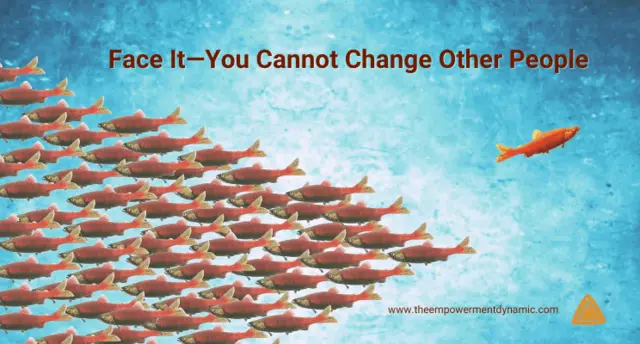
Face It—You Cannot Change Other People
The first question many people ask after learning about the shift from drama to TED* (*The Empowerment Dynamic) ® is, “These ideas are so helpful. How do I get other people to change?”There’s often a collective groan…

Choice Points Can Come When You Least Expect Them
This blog was written by Debbie Hulbert, our Director of Communications and Customer Service and long-time TED* advocate._________________________________________I recently visited my local grocery store where I’ve…
Going to the Balcony
As you read this blog, pause for a moment, and observe yourself. Where are you sitting or standing? How are you feeling (mad, glad, sad, excited, etc.)? How are you reacting to this unusual start to the blog? Do you want…
Weaponizing TED*
When people learn about the Dreaded Drama Triangles roles of Victim, Persecutor, and Rescuer, almost always the first thing they ask is, “How do I get myself out of these roles?”When TED* (*The Empowerment Dynamic)®…
The “I Know” vs “I Learn” Mindset
One of the faster ways to put yourself into a drama relationship with yourself and others is to pretend you know something when you don’t. If you pretend you know how to fix your busted computer, when you don’t know how,…