
Why Forgiving Is So Hard
Human beings are wired to connect and have a natural desire to be in positive relationships with others. But relationships are not always “goodness and light.” Whether at home or work, even the most trusting…
Human beings are wired to connect and have a natural desire to be in positive relationships with others. But relationships are not always “goodness and light.” Whether at home or work, even the most trusting relationships go through breakdowns and difficult stretches.
If an argument or misunderstanding has arisen, a genuine desire to repair and forgive is essential. Moving past the blame and the need to be right is vital, and even more important, is taking responsibility for your individual contribution to the situation.
Relationships are loaded with complex dynamics. No wonder there are many ways forgiveness can be blocked. Here are a few:
- Holding on to the grudge, thinking it will somehow punish the other person so you can finally feel righteous.
- Hoping you will be protected from getting hurt again.
- Believing that fairness and justice must be served, since the other person was wrong.
- Thinking that forgiving will excuse the behavior that caused you so much pain in the first place.
None of these obstacles really work because, in many cases, the other person has moved on from the situation while you are still in the drama!
When you hold blame or resentment and are unable to forgive, your spirit can become bitter and fearful. With this as your inner emotional state, you are seeding the anxiety that fuels the Dreaded Drama Triangle (DDT). This bitterness hurts you more than anyone else in the long run.
All human beings want to feel love and appreciation. But if you hold a grudge and cling to thoughts and feelings, you are harming yourself, when the other person often has long forgotten what happened. You will also keep the negative energy alive—whether that energy is outwardly expressed or only held silently within your own mind and spirit.
What we know about forgiveness, as the character Ted explains in The Power of TED*, is that “Forgiveness is giving up the hope of having a better past.” Letting go of the unrealistic hope of righting the past creates an opening to forgive and a new future.
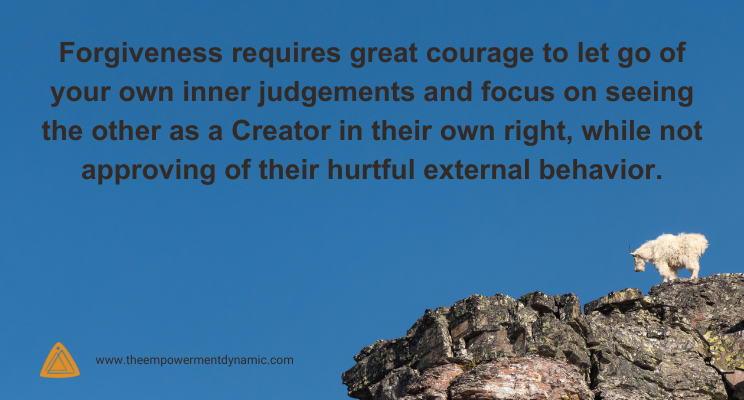
You never know the motives or situations that are behind another person’s persecuting words or behavior. All you know is, as a Creator, you have the power to choose your response to a difficult situation or person. You can view them and the situation as a Challenger from which you can discern your own “lessons learned.”Forgiveness is not about being passive in the face of injustice, abuse, or condoning the actions of others. Forgiveness requires great courage to let go of your own inner judgments and focus on seeing the other as a Creator in their own right, while not approving of their hurtful external behavior.
And, forgiving yourself may be the most difficult of all. Holding onto self-persecuting thoughts restricts your heart and prevents you from realizing your true essence as a Creator. When you let go of your inner scorecard, you can begin to nurture the Creator in yourself. As you put down the mantel of judgment and resentments, you are creating an opening for that Creator in you to rise.
One final point. If you cannot forgive now, set an intention that you will forgive when you are ready. Setting the intention to forgive, sometime in the future, can help thaw the negative energy that keeps your relationship drama active.
Be patient with yourself as you begin this powerful practice and free yourself from the bondage of living in an unforgiving past. By doing so, you can free your energy and spirit to turn toward the future with more resilience and resourcefulness.
Our wish for you is that you learn to let go of obstacles to your love, toward yourself, and others. The world certainly needs all the love we can generate for our own good and the good of the world.