
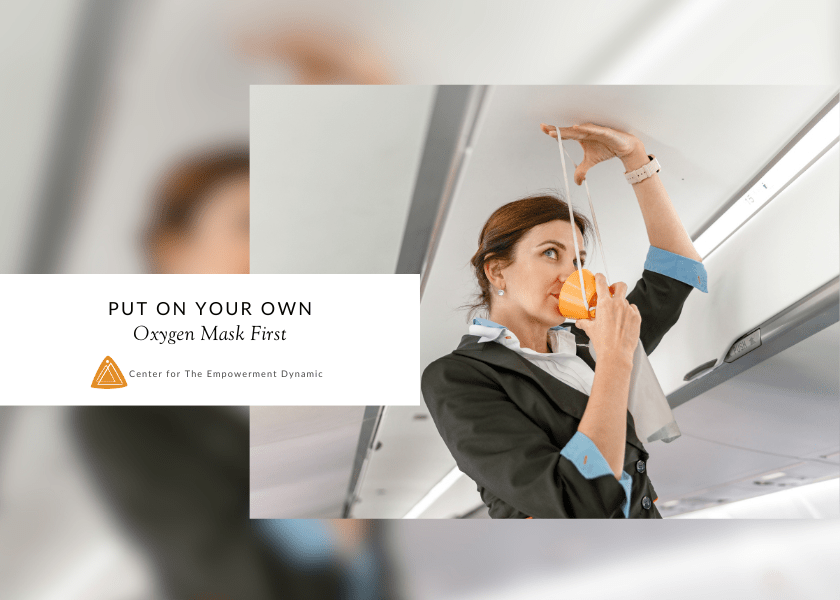
Put on Your Own Oxygen Mask First
https://theempowermentdynamic.com/wp-content/uploads/2025/02/2.7.2025.mp3 When people first learn about TED* (The Empowerment Dynamic) ® , one of the most common reactions is thinking about how they can use the framework…
https://theempowermentdynamic.com/wp-content/uploads/2025/02/2.7.2025.mp3
When people first learn about TED* (The Empowerment Dynamic)®, one of the most common reactions is thinking about how they can use the framework to change other people. This dilemma came to light not long ago when I was speaking with a senior organizational consultant and executive coach who has worked with individuals and teams in numerous organizations. He has lots of opportunities to share the TED* framework with individuals and teams inside the large organization where he works.
When he shares with individuals and teams the Dreaded Drama Triangle (DDT) and its positive alternative TED*, he told me people are quick to complain about other people. He said he hears people say:“Aha, this is so helpful. Other people just need to stop being a Victim, stop being a Rescuer, or Persecutor and it will make my life easier!”I smiled. I have shared the DDT and TED* for almost 20 years with leaders and coaches and often hear a similar first impression. People recognize the framework in other people sooner than they see it in themselves. He continued:“Unfortunately, this approach rarely works. The true power of TED* comes when they are willing to change their behavior, not someone else’s. And, when they are attached to changing someone else, they often approach it from the DDT, seeing other people as a problem to fix. For example, I often hear these comments, even from the smartest and most educated people.
- “I just need to show this other person how they are being a Victim.”
- “Next time the boss acts like a jerk I am going to tell him to stop being a Persecutor.”
- “I’d like to get a certain person to stop being such a Rescuer, always being so nice and agreeable.”
As he spoke, I got curious about what strategy he used to break the trance of focusing first on other people, so I asked him, “What do you say to people when you hear those statements?“I tell them it is important to put their own ‘oxygen mask on first,’ referring to the common phrase they hear on every air flight. They quickly understand that analogy, so it getstheir attention. I challenge them to focus on their own way of thinking and behavior and let go of trying to change others. By doing so, I invite them to see that they can meet their own needs by taking responsibility for themselves first. Ironically, this also gives them the greatest chance at helping others shift out of the DDT.
In TED*, our power comes from focusing on what role we’re playing in any relationship while letting go of the need to change others. If we aren’t getting the results or response we want, or if we’re experiencing drama, discomfort, or feeling triggered, we can start by shifting our role and behavior. That’s what I invite and challenge them to see.”I appreciated hearing how this senior consultant shared the DDT and TED* triangles and his experience with those who first learned about the framework.
It is essential for us to take responsibility to change our behavior first. The paradox is that this is often the path that can lead to changes in others’ behavior.
The next time you want someone else to behave differently, consider the insights offered by this senior organizational consultant. Put on your oxygen mask first. Tell yourself the truth about how your own behavior might be contributing to the drama in your own relationships. Then, ask yourself what a more effective way for you is to embody The Empowerment Dynamic.
Until next time, here’s to the Creator in you.DonnaP.
S. Today is the last day for the early bird special for the TED* Foundations Coaching Course for Coaches and Leaders. Come experience The Empowerment Dynamic like you never have before. See below for more details!