Setting Healthy Boundaries
https://theempowermentdynamic.com/wp-content/uploads/2024/08/setting-healthy-boundaries-masculine.mp3Setting healthy boundaries is essential to shift from drama to empowerment. But why is it sometimes so difficult to set…
https://theempowermentdynamic.com/wp-content/uploads/2024/08/setting-healthy-boundaries-masculine.mp3Setting healthy boundaries is essential to shift from drama to empowerment. But why is it sometimes so difficult to set and keep a healthy boundary? The answer is unique to each person.
A healthy boundary contains limits for you to decide what works for you. They work because they support you to live aligned with your core values and help you be the best version of yourself. If you don’t have healthy boundaries, you are likely to be at the mercy of other people or situations.
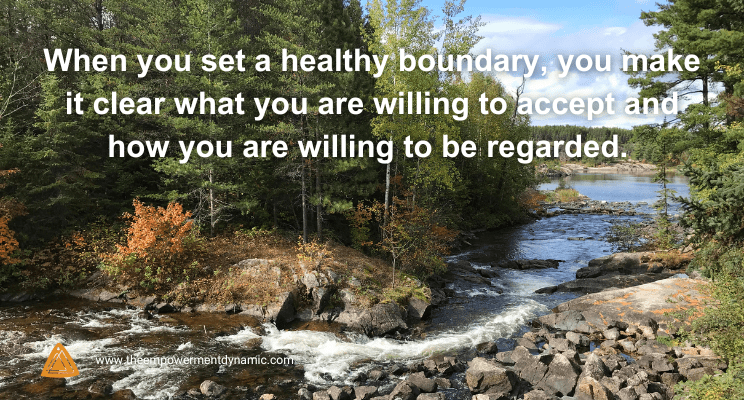
To understand the importance of healthy boundaries, think of how nature creates boundaries. Riverbanks, for example, support a river’s natural flow of water. Without its firm banks, the river would flood into the fields, pick up toxins and topsoil, and return with murky, muddy water. The same goes for human beings. Without healthy boundaries you can flood yourself with unhealthy relationships.
Healthy boundaries help you feel relaxed and comfortable in relationships. They are an indication of how you allow people to relate to you. When you set a healthy boundary, you make it clear what you are willing to accept and how you are willing to be regarded. But without healthy boundaries you are at risk of creating emotional drama. You may:
- Swing from oversharing personal information but panic when someone wants to get closer, and shut down emotionally;
- Feel like a doormat and let others walk all over you;
- Feel invisible or not listened to; or
- Come away from conversations with heavy, drama-filled emotions.
Here’s the paradox. Saying yes and trying to please everyone means nothing if you can’t set healthy boundaries. You are defined by what you say no to, as much as what you accept. If you say yes to everything and everyone, how do you know what you value? How do you know what matters most to you? How do you create balance in your life?
By saying no to something or someone, you take a stand and, in effect, set boundaries. It is the boundary that makes room for you to have, or receive, something you want. But if you do not set that boundary, then you do not stand for anything. And when you do not take a stand, you are not available to say yes to what you really care about. Even worse, other people will wonder what you stand for.
If you were fortunate, setting healthy boundaries was a natural part of what you learned growing up. You also learned that you can’t predict how others will respond to the boundaries you set. The only thing you can control is your own behavior and what is right for you.
Healthy boundary setting is a fundamental act of self-care and requires the ability to self-reflect in the moment. Here are a few suggestions to develop the habit of setting healthy boundaries:
- Practice saying “no.” When learning to set boundaries, start with those you trust and let them know you are practicing saying no to some requests. This will allow you to practice saying no in a supportive environment.
- Speak directly to those with whom you need to set a boundary. Instead of complaining to others about a concern you have with another, speak directly to the person with whom you have an issue, rather than gossiping or going behind their back.
- Be clear about your needs. Do not assume anyone knows what you are thinking. Make an “I statement” about what you need and what you are and are not willing to commit to.
A boundary is a signpost clarifying to others how you want to be treated. The truth is, no one will respect your boundaries if you don’t set them in the first place. As a Creator, clarifying and communicating boundaries is an essential practice in co-creating and collaboration.