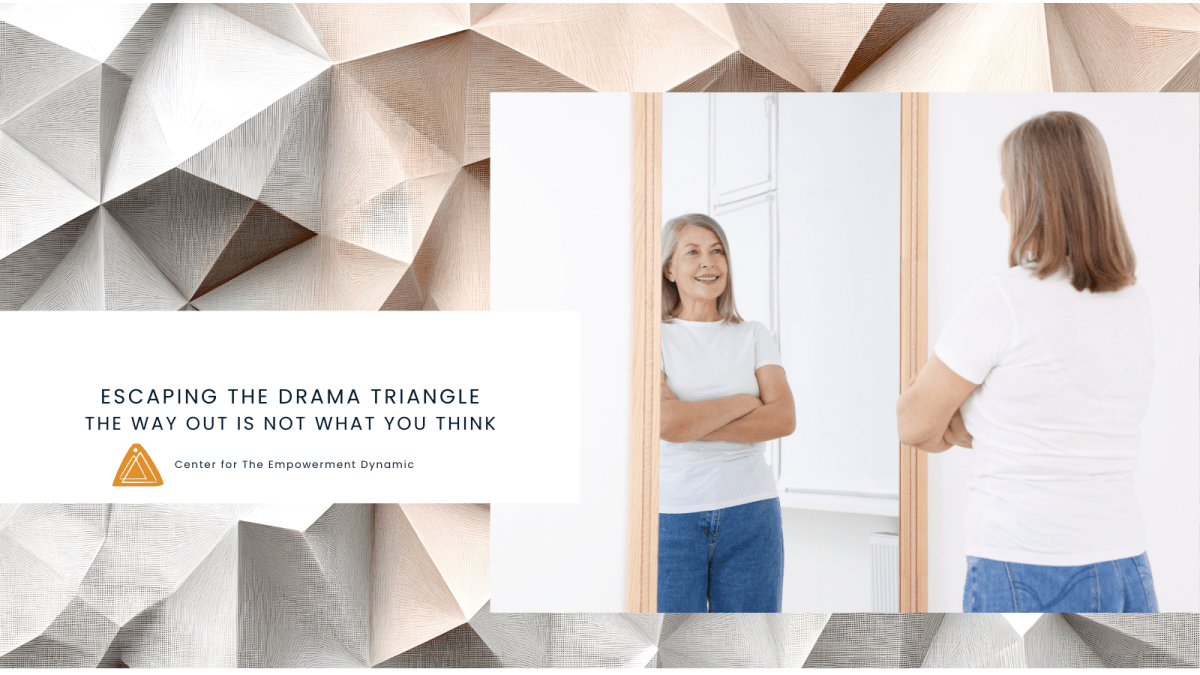
Escaping the Drama Triangle: The Way Out Is Not What You Think
The Karpman Drama Triangle is a simple yet profound social model that explains how people respond when they feel stressed, threatened, or stuck in conflict. Developed in 1968 by San Francisco psychiatrist Stephen…
The Karpman Drama Triangle is a simple yet profound social model that explains how people respond when they feel stressed, threatened, or stuck in conflict. Developed in 1968 by San Francisco psychiatrist Stephen Karpman, it maps how the Victim, Persecutor and Rescuer roles create predictable but toxic patterns that can emerge in our relationships, and within ourselves.
When we can see what’s happening in the midst of human relationships, we gain awareness of our unconscious habits. That awareness creates space to pause, reflect, and recognize that we have a choice in how we want to respond.
David Emerald, in his book The Power of TED* (*The Empowerment Dynamic) called the Drama Triangle, DDT, or Dreaded Drama Triangle because of its toxic nature. By whatever name, it offers a brilliant insight into our human reactive patterns.
So, it is natural that one of the first questions people ask me when they learn about the DDT is, “Now that I see it, how do I escape it?”My answer is always the same: “We don’t escape it.”There is a very natural desire to escape or avoid what we don’t like about ourselves, especially once we become aware of it. If we are unconscious of a pattern, we will repeat it again and again. That is why once we see the reactive pattern, with the help of Dr. Karpman’s brilliant insight, we want more than ever to get rid of what we don’t like about ourselves. This is deeply human. When something causes discomfort or shame, our instinct is to push it away.
Once we see the DDT in our own reactive parts, we often turn those parts of us into the enemy and activate our inner-Persecutor. We don’t like the feeling of being less than who we want to be, so we go looking for a way to fix ourselves. We read another self-help book, hire a new coach or therapist, attend a retreat, read a blog about how to transform our drama, meditate more—all in an effort to escape our drama patterns.
But what if the question isn’t “How do I get out of the Drama Triangle?”What if the real questions are: How can I meet my human frailty with more grace and less judgment? How can I welcome everything and reject nothing so I can learn and grow? How can I see the gift hidden in my drama rather than trying to eliminate it?
When we label a part of ourselves as the enemy, we drop deeper into the DDT. We keep asking, “How do I escape this?” or “How do I get rid of my saboteurs?” With those questions, we become smaller, searching for a way out of a universal human experience, convinced something is wrong with us.
Trying to escape something intrinsic to being human only reinforces our inner division. Force, resistance, and self-criticism don’t lead to freedom. They deepen the very pattern we’re trying to avoid.
The way out is not through effort or willpower, but through sensitivity and awareness. It begins when we gently observe the dynamic as it’s happening—without judgment, without trying to fix it. Conscious surrender to our human habits is the real antidote to the DDT.
When we stop trying to escape, something surprising happens. The urge to avoid disappears. We notice our patterns with kindness and spaciousness. In everyday language—we give ourselves a break. And in that acceptance, we discover our freedom to simply choose a more skillful response.
This is why TED*—The Empowerment Dynamic®—is so powerful. Like the Drama Triangle, it names our human experience, not from our reactive lens, but from the truth of who we really are. It shows us that within our imperfections lives something unchangeable: our Creator essence. This is not something we earn or achieve. It is who we already are.
Freedom from our drama habits will not happen with the same thinking that created the drama in the first place. When we recognize the continuum between our drama responses and our empowered choices, and when we accept all parts of ourselves, we come into a more intimate relationship with the full range of our humanity.
Do you want to feel more empowered and lean into your identity as Creator? Would you like to learn and grow alongside other Creators?
Please join me in the Creator Community, where Creators connect with other Creators! We had our first call this week. Here is what people are saying:
- "Heart-expanding connection!"
- "Met friendly like-minded people."
- "Reminded that we are never not creating"
- "Proof I am not alone, yet I am still unique...and a CREATOR!"
Join Today!Until next time, Here’s to the Creator in you.
Donna**************************Join the Creator Community!Hosted by Donna Zajonc. Sponsored by the Center for The Empowerment Dynamic.What's included:
- Monthly live calls with Donna (first Thursday, 8 AM Pacific)
- Exclusive blog posts, content, and mini teaching videos
- Weekly prompts to foster discussions with fellow Creators
- Weekly practical TED* tips
- Early access to what's coming next for the Center
$14.99/month or $149/year (save 17% annually)