Remembering the Life of My Son:
The Day of the Dead and Healing Grief Content note: This blog references suicide and mental illness. I'm writing this week's blog from Ajijic, Mexico, where I'm spending time during Día de los Muertos—Day of the Dead.…
The Day of the Dead and Healing Grief
Content note: This blog references suicide and mental illness.
I'm writing this week's blog from Ajijic, Mexico, where I'm spending time during Día de los Muertos—Day of the Dead. Families gather at altars, sharing stories and memories, welcoming their departed loved ones, home for these sacred days.
Two years ago, my son Carson died by suicide. Three years before that, a mysterious illness invaded his brain. Paranoid psychosis suddenly transformed our brilliant, funny, deeply loved son into someone caught in the nightmare of mental illness.
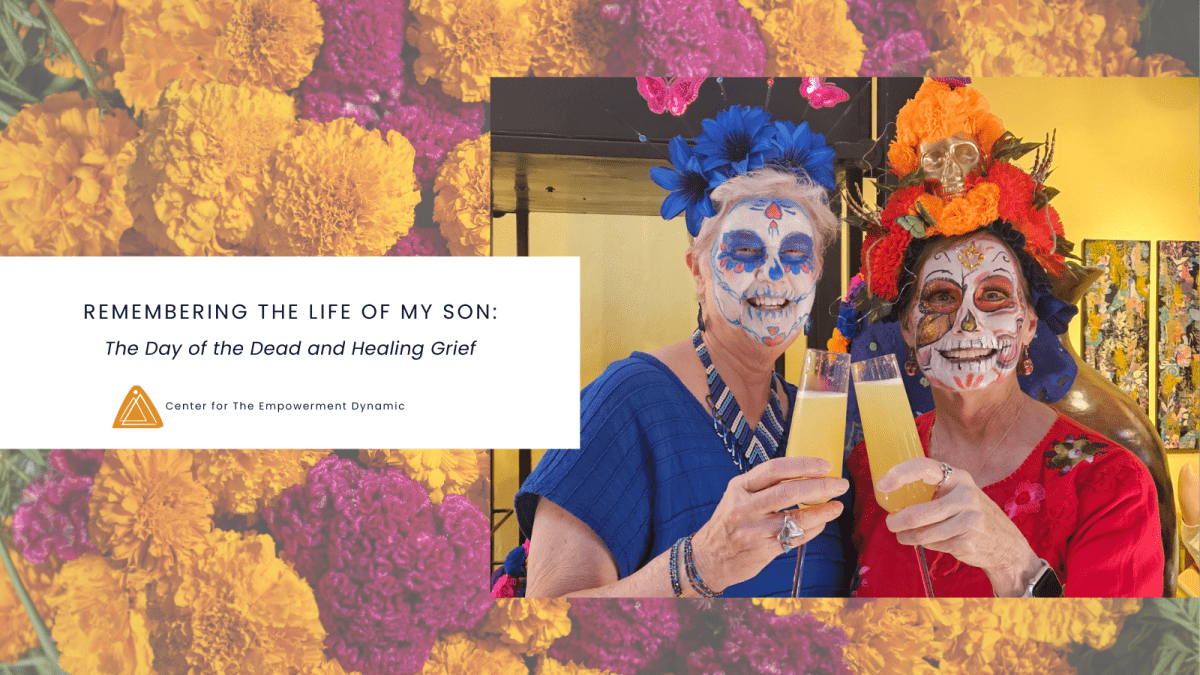
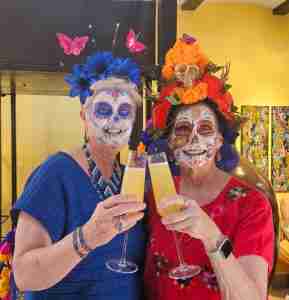
As I watched Mexican families this past week celebrate their dead with warmth and openness, I'm learning something about the circle of life that my own culture doesn't teach well. Here, death isn't locked away in private grief. It's woven into life with flowers, favorite foods, music, and altars (ofrendas) displaying stories about their life. So much laughter mixed with tears. Here is a picture of me, faced painted, and toasting to my son, a mimosa, his favorite drink.
During Carson's active psychosis, our family lived in the Dreaded Drama Triangle (DDT). I see it now with the clarity that only distance and deep grief can bring.
We were all Victims, not least Carson himself, victimized by an illness that hijacked his mind, his reality, his ability to trust even those who loved him most. In his moments of clarity, he was terrified, caught in delusions and fear. And we—his father, his sisters, and I—were victimized too, watching helplessly as this disease stole our son and brother, bit by bit.
We desperately searched for doctors, therapists, medications, facilities -- anything that might "fix" this. But this was also the first year of the pandemic. Medical help, even if Carson would have accepted it, was scarce. Systems were overwhelmed and access was limited. The isolation made everything worse.
We threw ourselves at the problem with the frantic energy that comes from watching someone you love disappear before your eyes. We felt helpless. Having spent my life supporting people to shift from powerlessness to empowerment, this admission cracks me open even now.
Six months ago I lost David, husband of many years, business partner and co-founder of our original work, The Empowerment Dynamic. David's death was peaceful from a sudden heart attack and the natural completion of seventy years well lived. Each day as I help lead our company and carry forward his legacy, gratitude comes easily. I can celebrate his life, his contributions, and his wisdom without the sharp edges of tragedy cutting through every memory.
Carson's death is different.
Sitting in the plaza of this beautiful Mexican town, I watched families carefully arrange photographs on the altar of their loved one. As I sat, I felt familiar waves of traumatic grief that can still suddenly take my breath away. But something was different. The ache was softening.
Many times, in these two years, my focus has been locked on Carson's suffering. The terror he must have felt. The isolation. His suffering that led to that final, terrible decision. I've replayed moments, conversations, signs I might have missed. The Persecutor voice whispers: "You should have done something different. You should have saved him."But here, surrounded by this culture's beautiful relationship with death, something is shifting.
The Day of the Dead isn't about how people died. It's about how they lived. Who they loved. What made them laugh. The ways they touched the world during their time here.
Carson had thirty years of life. He had friends who adored him. Two sisters who loved their little brother. A father who coached his football teams and loved nothing more than a round of golf with his son. A mother—me—who loved him fiercely from his first breath. He was funny and smart and kind. He loved music and wrote hundreds of original songs. He had a smile that could light up a room.
For these two years, I often focused on his five years of illness and the tragedy of his death. I'm beginning to see I have thirty years of life to remember and celebrate. Thirty years that mattered, even though they ended far too soon.
The Mexican culture understands something about the circle of life that I'm just beginning to grasp. Life and death aren't opposites—they're partners in a dance. In fact, death is the great equalizer. To honor death is to honor life. We continue to honor those we've lost by keeping them alive in our memories.
Standing in Creator—the TED* role that asks "What do I want to create?"—feels almost impossible when your child has died. What could I possibly want to create from this devastation?
But maybe that's the wrong question. Maybe it's: "How do I want to remember? How do I want to carry Carson forward? How can my broken-open heart transform the way I live and love?
Carson's illness and death have cracked me open in ways I'm still discovering. The pain has been excruciating. But broken-open hearts let more light in. They create space for deeper compassion, for holding others' pain with more tenderness, for understanding that sometimes the most empowered response is simply to witness, to be present, to acknowledge that some things can't be fixed.
This week in Ajijic, I'm learning to celebrate Carson's life, not just mourn his death. To remember his laughter, not just his suffering. To honor the love that surrounds him—that still surrounds him—from family and friends who miss him desperately. I am experiencing both grief and gratitude.
Living from the Empowerment Dynamic when life is this painful doesn't mean the pain goes away. It means choosing, slowly and imperfectly, where to place our focus.
Carson's life mattered. His struggle mattered. His death matters. And somehow, in this warm Mexican celebration of life and death intertwined, I'm finding a gentler way to hold it all.
Carson, here’s to the Creator in you.